Introduction
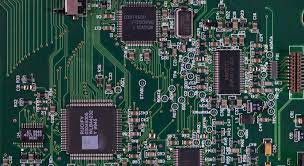
Integrated circuits (ICs) are the miniaturized brains of modern electronics. These tiny chips contain millions or billions of transistors that can perform complex tasks, such as processing, storing, and transmitting information. ICs are used in everything from computers and smartphones to medical devices and automobiles.
ICs have revolutionized the world of technology by enabling the development of smaller, faster, cheaper, and more efficient devices. However, as technology advances, ICs also face new challenges and opportunities in terms of design, manufacturing, and application. In this blog post, we will explore the future of IC component technology and how it will impact the semiconductor industry and the world.
IC Component Technology Trends
One of the main trends in IC component technology is the continuous scaling of feature sizes. According to Moore’s law, the number of transistors on a chip doubles every two years, resulting in a significant reduction in the size and cost of electronics, as well as increased performance and functionality. However, as feature sizes approach the physical limits of existing semiconductor materials and manufacturing processes, new challenges arise in terms of reliability, power consumption, heat dissipation, and cost.
To overcome these challenges, the semiconductor industry is developing new technologies and materials that can enable further scaling or enhance existing capabilities. Some of these technologies and materials are:
Extreme Ultraviolet (EUV) lithography
EUV lithography is a new manufacturing technique that uses ultraviolet light with a wavelength of 13.5 nanometers to create finer patterns on silicon wafers. EUV lithography can enable the production of chips with feature sizes below 10 nanometers, which can increase the density and performance of ICs.
High-k dielectrics and metal gates
High-k dielectrics and metal gates are new materials that can replace the traditional silicon dioxide and polysilicon layers in transistors. High-k dielectrics can reduce the leakage current and power consumption of transistors, while metal gates can improve the switching speed and performance of transistors.
Graphene and 2D materials
Graphene and 2D materials are thin layers of atoms that have unique electrical, optical, thermal, and mechanical properties. Graphene and 2D materials can potentially replace silicon as the base material for ICs, as they can enable faster, smaller, and more flexible devices.
3D stacking
3D stacking is a technique that involves stacking multiple layers of chips on top of each other to create a single device. 3D stacking can increase the functionality and performance of ICs by reducing the distance between components and enabling more interconnections.
IC Component Challenges
Despite the progress made in IC component technology, there are still many challenges facing the industry:
- One of the biggest challenges is the increasing complexity of IC designs
As the number of transistors on a chip increases, so does the complexity of the design and the manufacturing process. This can lead to increased development costs, longer design cycles, and a higher likelihood of errors.
- Another challenge is the growing demand for ICs from various applications
Especially from emerging fields such as artificial intelligence (AI) and machine learning. AI and machine learning require high-performance, Low-power, and specialized ICs that can process large amounts of data and perform complex calculations. However, designing and manufacturing such ICs can pose technical and economic challenges for the industry.
IC Component Opportunities
Despite the challenges facing the industry, there are also many opportunities for growth
and innovation. One opportunity is the development of new applications for ICs, particularly in emerging fields such as AI and machine learning. ICs are essential for the development of AI and machine learning algorithms and systems, which are becoming increasingly important in many industries.
Some examples of AI and machine learning applications that use ICs are:
Facial recognition
Facial recognition is a technology that can identify or verify a person’s identity based on their facial features. Facial recognition uses ICs that can process large amounts of image data and perform complex calculations to match faces.
Natural language processing
Natural language processing is a technology that can understand and generate natural language texts or speech. Natural language processing uses ICs that can process large amounts of text or speech data and perform complex calculations to analyze or synthesize language.
Self-driving cars
Self-driving cars are vehicles that can drive themselves without human intervention. Self-driving cars use ICs that can process large amounts of sensor data and perform complex calculations to navigate the road.
Conclusion
TresBizz is a reliable and trusted partner for IC component needs. We offer a wide range of high-quality, hard-to-find, low-cost, and fast-delivery IC components from various manufacturers and suppliers. Our team of experts can help you with your technical and business inquiries, and we have a network of logistic partners to ensure on-time delivery. Contact us today to learn more.