
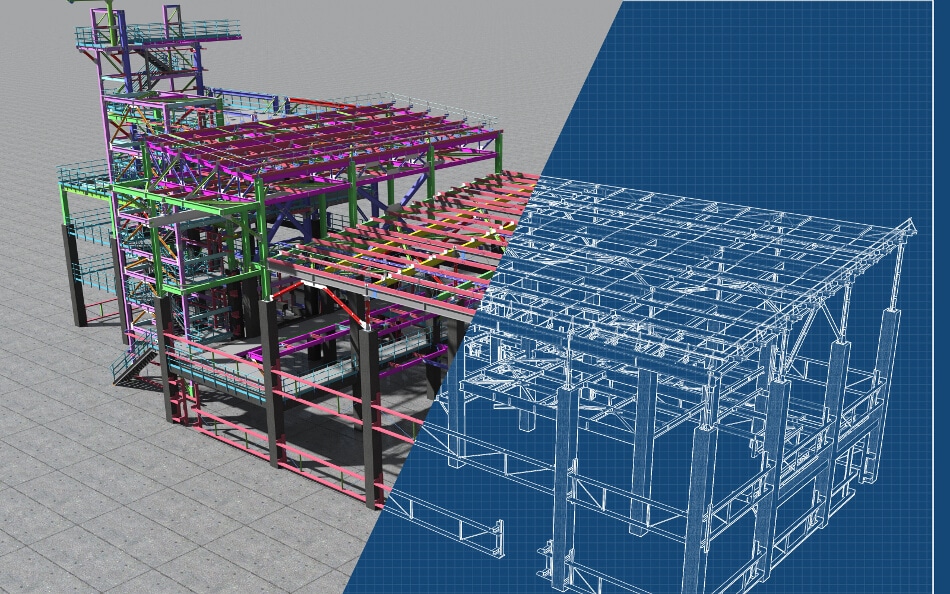
Building Information Modeling (BIM) is a revolutionary approach in the architecture, engineering, and construction (AEC) industries. It goes beyond traditional drawing-based CAD technologies, transforming the way buildings are designed, constructed, and managed.
BIM involves creating a digital representation of a building’s physical and functional characteristics, which includes detailed information about building components and their relationships. This shared knowledge improves decision-making throughout a project’s lifecycle and fosters collaboration among stakeholders, from architects and engineers to contractors and building owners.
Key aspects of BIM:
- Shared 3D Model: BIM enables all project stakeholders to work with a shared 3D model, ensuring everyone has access to relevant information throughout the design and construction phases.
- Intelligent Objects: Building components in BIM are represented as intelligent objects that carry information about themselves. This data includes specifications, dimensions, materials, and more.
- Lifecycle Management: BIM supports the entire building lifecycle, from concept and design to construction, operation, and maintenance. This allows for better commissioning, handover, and ongoing facility management.
BIM software tools commonly used in the industry include Autodesk’s Revit, Bentley Systems, ArchiCAD, Vectorworks, Tekla Structures, and many others. These tools facilitate the creation, management, and analysis of BIM models.
Benefits of Building Information Modeling (BIM):
- Preconstruction Benefits to Owners:
- Concept and Feasibility Analysis: Assess the feasibility of a project within budget and time constraints.
- Improved Building Performance: Evaluate schematic designs for functionality and sustainability.
- Enhanced Collaboration: Foster collaboration among project teams from the outset.
- Design Benefits:
- Accurate Visualizations: Create 3D models directly for more accurate design representations.
- Error Reduction: Automatically correct errors when design changes are made.
- Consistent Drawings: Generate accurate and consistent 2D drawings at any design stage.
- Early Collaboration: Facilitate collaboration among multiple design disciplines.
- Cost Estimation: Extract cost estimates from the BIM model during the design phase.
- Energy Efficiency: Evaluate energy use and sustainability early in the design.
- Construction and Fabrication Benefits:
- Fabrication Basis: Use the design model as a basis for fabricated components.
- Quick Design Changes: Easily incorporate and visualize design changes.
- Error Detection: Identify design errors and omissions before construction.
- Construction Planning: Simulate construction processes using 4D CAD for better planning.
- Lean Construction: Improve planning and scheduling for subcontractors and resource management.
- Procurement Integration: Use BIM quantities and specifications for material procurement.
- Post-Construction Benefits:
- Commissioning and Handover: Collect and link maintenance information for facility management.
- Facility Management: Use the building model for managing and maintaining facilities.
- Integration with Management Systems: Connect the model with facility operation and management systems for accurate information.
In summary, Building Information Modeling revolutionizes the AEC industry by providing a collaborative, data-rich approach to building design, construction, and management. It offers numerous advantages, from improved project coordination and cost estimation to enhanced facility management and sustainability assessment. BIM is becoming the standard for modern construction projects worldwide.
